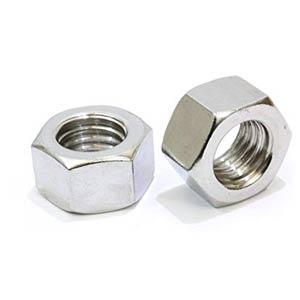
Slotted heavy hex nuts are a type of nut with a hexagonal shape, designed for use in heavy-duty applications. They are similar to standard heavy hex nuts, but they feature a slot cut into the nut, allowing the insertion of a pin, cotter pin, or similar locking mechanism to secure the fastener in place.
This slot enhances the nut's ability to withstand extreme vibrations, shocks, and high torque without loosening, making them ideal for critical applications in heavy machinery, construction, and infrastructure.
Hexagonal Shape: These nuts maintain the standard hexagonal form that allows easy gripping with standard wrenches, making them simple to tighten and remove in most industrial and construction applications.
Slotted Design: The defining feature of slotted heavy hex nuts is the slot that runs across the face of the nut. This slot provides an additional locking mechanism, enabling the insertion of a pin or cotter pin to prevent the nut from loosening over time.
Increased Strength: Slotted heavy hex nuts are designed to handle high tensile and shear loads, making them suitable for use in demanding applications. The heavy hex design provides a larger surface area, which increases the nut's ability to resist forces.
Vibration Resistance: By allowing for the use of a pin or other locking element, slotted heavy hex nuts provide enhanced resistance to loosening due to vibrations, making them ideal for machinery, vehicles, and other equipment prone to movement or vibration.
Corrosion Resistance: Depending on the material used, slotted heavy hex nuts can be designed with corrosion-resistant properties to withstand harsh environments, including marine, chemical, or outdoor conditions.
Slotted heavy hex nuts must comply with various international standards to ensure their quality, compatibility, and performance. Common standards for these nuts include:
ASTM A563: A standard specification that covers the material, mechanical properties, and dimensions of nuts, including slotted heavy hex nuts. This standard ensures that the nuts meet the necessary strength and quality requirements for general industrial and construction applications.
ISO 4035: This international standard specifies the dimensions and mechanical properties of nuts, including slotted heavy hex nuts, in both metric and imperial sizes.
ASME B18.2.2: A standard that outlines the requirements for heavy hex nuts, including slotted versions, used in industrial applications. It covers the specifications for dimensions, mechanical properties, and manufacturing processes.
DIN 934: This German standard applies to hex nuts, including heavy hex nuts, and specifies the dimensions and mechanical properties that slotted versions must meet.
Slotted heavy hex nuts can be manufactured from various materials, depending on the specific requirements of the application. Common materials used for these nuts include:
Carbon Steel: Standard slotted heavy hex nuts are often made from carbon steel due to its excellent mechanical properties, including high tensile strength. These nuts are used in general applications where corrosion resistance is not critical.
Stainless Steel: Stainless steel slotted heavy hex nuts are ideal for environments where resistance to corrosion, rust, or staining is required, such as in marine, food processing, or pharmaceutical industries. Stainless steel grades like 304 and 316 offer enhanced corrosion resistance.
Alloy Steel: Alloy steel nuts are used for heavy-duty applications that require higher strength than carbon steel. They are typically heat-treated to improve their tensile strength and durability under extreme conditions.
Brass: Brass slotted heavy hex nuts are used in applications where low electrical conductivity or resistance to corrosion is necessary. Brass offers a non-corrosive alternative to steel in certain industries.
Coated Steel: Slotted heavy hex nuts may be coated with materials like zinc, hot-dip galvanizing, or phosphate to increase corrosion resistance. Zinc-plated nuts provide moderate protection, while galvanized nuts offer more robust defense against rust, especially in outdoor or marine environments.
Plastic: In applications where non-metallic fasteners are needed, such as electrical systems or lightweight machinery, plastic slotted heavy hex nuts (e.g., nylon or polypropylene) are used for their insulation properties and resistance to certain chemicals.
Slotted heavy hex nuts are available in a variety of sizes, materials, and finishes. Key specifications include:
Sizes: Slotted heavy hex nuts are available in both metric and imperial sizes, typically ranging from M6 (metric) or 1/4 inch (imperial) to larger sizes like M100 (metric) or 4 inches (imperial). The exact size depends on the required bolt diameter and application.
Threads:
Grades:
Coatings and Finishes:
Mechanical Properties: Slotted heavy hex nuts are designed to handle high tension and torque, with typical tensile strengths ranging from 60,000 to 150,000 PSI depending on the grade and material used.
Slotted heavy hex nuts are widely used across various industries and applications, where the need for secure, vibration-resistant fastening is critical. Common uses include:
Heavy Machinery: In construction, mining, and manufacturing, slotted heavy hex nuts are used to secure bolts and prevent loosening due to the vibrations that machinery produces.
Automotive: Used in engine parts, suspension systems, and other components that experience high levels of vibration.
Structural Applications: Slotted heavy hex nuts are used in steel structures, bridges, and other construction projects where high-strength fasteners are required.
Marine: Stainless steel slotted heavy hex nuts are often used in marine environments to prevent loosening from saltwater corrosion and vibrations.
Aerospace: Used in aircraft and aerospace components to secure critical parts and reduce the risk of bolt loosening during flight.
Oil and Gas: In offshore drilling and oil rigs, slotted heavy hex nuts are used to ensure that bolts and other fasteners remain secure under extreme conditions.
Enhanced Vibration Resistance: The slot allows for the use of cotter pins or other locking mechanisms, preventing the nut from loosening due to vibrations.
Durability: The heavy hex design provides greater strength and durability, making these nuts suitable for heavy-duty applications.
Corrosion Resistance: With the option of stainless steel or coatings, slotted heavy hex nuts can perform well in corrosive environments, ensuring long-lasting performance.
Space-Saving: The design of slotted heavy hex nuts allows them to fit into tighter spaces while still providing a secure fastening solution.
Increased Security: The additional locking feature (through cotter pins or locking pins) makes them more secure compared to regular hex nuts, reducing the likelihood of fastener failure.
Additional Parts Required: The use of slotted heavy hex nuts typically requires the additional use of cotter pins or locking devices, which can increase the complexity and cost of installation.
Not Suitable for All Applications: In applications that do not require locking mechanisms, using slotted heavy hex nuts might be unnecessary and inefficient.